
Interview by: Velimir Božović
Recorded by: Steve Bates
Radio program: Radio Elsewheres
English transcription of the interview
Bosnian translation below
Radio Elsewheres: A Symphony of the Siege, so finally Haris Sahačić who is here with us maybe can speak about the whole process of making it, it is really interesting experience, I have to say as soon as I walked into that space and seat there for a minute or so, I remembered something that is unrelated to the siege or sound or memory of war or whatever.
That was actually the first time in my life before working with this film that I consulted a little bit about the sound. I had this, let's say, episode that is somehow related to PTSD at one moment. One friend of mine, a doctor, sent me these tapes, some kind of meditation tapes. There were 9 episodes, and one of these was like 30 minutes. You are supposed to sit down, lay down, make yourself comfortable, close your eyes and focus on the sound that you hear. So I am doing this in my room, where I spend most of the time when I am working I always think that there is no sound or whatever, but once when I close my eyes and focused, I could hear so many things, I had a feeling, after 5 minutes I could hear walls, I could hear the ceiling, all these things that are not producing any sound as far as I know. So, when I walked into your installation and set down, I had somehow similar feeling. It reminded me of that moment when I first realized how sound is present in our lives. And I think, somewhere in your text Lejla you said that oral architecture or sound scapes are present whether they are designed or not, right and obviously when you think about it is easier to stop any senses that are reaching you than sounds, even if you put plugs into your ears, sound is still siping in. Anyway, Haris, I really had a wonderful experience. I loved the piece. Can you talk a little bit about the whole process and how all that came together?
Haris Sahačić: Thank you for inviting me to be your guest and to have this nice conversation on work that I have conducted, it is electro acoustic sound composition, we call it Symphony of the Siege, because I have used really all the possible, let's say standards or esthetical rules of symphonies so the name Symphony of the siege has more to do with aesthetics than with ethics and this relation between esthetic question of electro acoustic sound composition as it is and the siege as it is, is actually big dilemma which I have been living in since the beginning of the project. Because in the beginning I knew, it is going to be electro acoustic sound composition, and I knew we have to tell the story, so the story, or material for the story was actually inspired by real events, and I have to say, it is once in the lifetime chance to produce this kind of work, because usually when you are doing the electro acoustic sound composition you are taking care about different standards. You do not care much about the story, you care much about how sound sounds, and you really take care about abstractions, you take care about impulse responses, about echoing and how mathematically the composition is organized. That is actually mathematics of composition, and I was constantly looking for the chance to tell the story, to be documentary through connecting aesthetics which is really a hardliner esthetics.
If electro acoustic people listen, they will say, oh men, this is not it, this is dirt, this is not clean, I hear everything, and it was like trying to purify something that really happened. That is one story and on the other hand, we needed conceptual messages and that is something where we entered into the sphere of urbanistic. There were like conclusions: how do you hear shots that happen in Hrasnica or 14 kilometers from here, actually you do not hear them, does this mean that you are safe? No. It means that there is a limitation of the siege that has been created by sound only. So, I used to say sometimes the siege itself was also an acoustic context. Because later I will come to why I say this, actually I can say now, you hear a lot of sounds that you could hear during the siege, you hear them every day in your life, there is no way you can avoid them, and that is another dimension of sound, only your context is different. So that was the big challenge, how to create in this 9 minute and 11 seconds, how to create that context where people will be able to hear what they remember, how to, let say trigger their memory just by sound in the complete darkness, I mean we were in a staged situation. So that was designing the context of the siege with the tool of sound so that was always looking for some pieces of electro acoustic esthetics and documentary or the real events in order to combine these two worlds, because I know that many people who have participated in our panel discussion mention that, for example, I do not use a lot of granates. I did not wanted to use them, I used just three demonstrations, one when the granate flys over very close and then hits somewhere in the distance, one when the granate fall and do not explodes, which is additionally dramatical moment, when you really hear the granate is creating that sound and you are kind of expecting to explode, and it does not explodes and you are kind of going through a particular set of emotions, that is how people explained to us, and then one granate which explodes very close and where you actually do not hear the explosion, when your listening apparatus is blocked and you really hear just the tinnitus, you hear the pressure of the bass – by the way – we were missing the subwoofer in our installation so that is why you could not hear that pressure, the sound of the pressure.
I put the frequency around 39 or 40 Hz so in this, let's say specter, I had the bass, the sound of the pressure and if we had subbass you can go even lower, then you would have that movement. And then inside this explosion you hear people yelling and screaming and everything is very defined. I really wanted to bring this document detail into the story which is electro acoustic. It is like I am entering with the documentary aesthetic into the aesthetic of the electro acoustic sound composition, that was my fight during this whole project.
Radio Elsewheres: Can you just clarify for the listeners why you choose not to use the sound of granates, that was a deliberate decision that you made?
Haris Sahačić: First of all, the grenades were something that happened to people, and I did not want to enter that sphere. Many people are connoting, I did not want to go that deep into the trauma.
Radio Elsewheres: You did not want to re-traumatize them.
Haris Sahačić: Exactly, and also it would not have this, I would say this dimension of the siege, because it would be more sounds of war, and I wanted to tell the story of the siege, of protocols of life of people that have been forced to live in specific circumstances. I wanted to say, ok, there is a war, but the circumstances of life were shaped by this war. I am not saying that sounds of war are different then the sounds of the siege, I am just saying that there are sounds of the siege that can be taken out from the context.
Radio Elsewheres: Yes, it makes me think about how the siege, the sound of siege, I think, one of the, at least in retrospect now, back then, that was, obviously, the most terrifying thing, when you hear granates flying, and bullets and what not, but in retrospect, I think the most terrifying thing is more in the absence of things then in presence of things, that is why this silence, many people talk about silence as a very powerful sound during the siege, so this absence is somehow, I think what you are talking about. In that case I agree, if in that piece I could hear granates falling around it could be almost like a movie like this sound aesthetic, I do not know if that is the term.
Haris Sahačić: You are exactly pointing out something that also I wanted to strass out somehow, because it would be a piece of a cake to go and find sound designers program where you just hit one button and then you get this explosion sound, but this is Hollywood explosion sound and this is not related to the reality or documentary, and everybody would say here, oh men what are they selling to us, and people here have survived all that, so I took really from Associated Press and from the journalists who have been recording during the siege in Sarajevo, small pieces and worked on them.
Radio Elsewheres: That was my next question, like in a practical sense, the sounds that we hear are basically the real sounds that you worked on.
Haris Sahačić: Yes.
Radio Elsewheres: So, it is not completely fabricated or made by you, you are using sounds, documented sounds from the siege.
Haris Sahačić: Yes. Many decisions during my production process were related, not only to how it really was, you know, to answer how it really was, shooting, but how it was for our interview partners. I was really looking to try to set our interview partner in that situation.
Radio Elsewheres: Were the participants that you interviewed, were they part of your process, were they exposed to your work during the work, or just at the end?
Haris Sahačić: I have really great respect for their participation, and for their testimonies also, and the way how they tell the story and how they enabled me to find myself in their position, it was like in a moment we were conceptualizing urbanistically this approach of war from the distance, from these 14 kilometers in a mathematical order into this 100 meter shooting, I was like thinking how to place exactly myself into this positions, how was it for them it should be understood by me as I have lived their experiences and that opened to me the dramaturgy where I could really tell the story.
Radio Elsewheres: I would just like to come back to something that you have said at the very beginning when you mentioned that this is the first time that you are trying to obey the narrative, so it is not just an aesthetic decision how something sounds. But listening to some of your works previously I felt there actually always is a narrative, maybe because you have pieces in which you talk so the narrative is brought by words, by talking but this time is probably the first time that it is done just by sound without speaking, without voice, it is very abstract, but it is narrative.
Yes, for the first time I had that experience that I entered with all my experiences into this work, few years ago I have done a work that is completely esthetic, completely mathematical composition Geosonic horizons, I was looking in the nature for mathematics, in order to present mathematics as a sound and sound as a music and then as a composition of nature, so that is where I was. I was impressed by mathematics.
Radio Elsewheres: I can see that.
Haris Sahačić: And of course I needed to have some mathematics, and I started to look for the symbolic values that are historical. 44 months of the siege, 44 beats per minute, very slow beats. Then 44 miniatures, the whole Symphony of the siege is actually a collection of 44 sound miniatures and every single miniature is created as a loop, can function as a loop, even in the rhythmical sense, that is where I was inspired by Stockhausen and his work where you really hear how musical is everything that we hear around our self. Every miniature has its name, and all the miniatures have poetic order, so it is like a poem. I do not know if I succeeded in English but in Bosnian it is in order. It is like trying to build history in a code in this composition that is highly esthetically produced and also communicates the information that is historical and documentary.
Radio Elsewheres: My next question to you – because this is the first time that you said that you are doing that – so it is not just mathematics it is not technology, but actually human experience stories. Did you enjoy it at the end, and do you think this will change the way you work, that you are going to do more work like dealing with history, or not necessarily history with human experience with real people.
I was limited by technological means, for example if I had to say that the whole symphony of the siege has 300 tracks and, on every track, there is a variety of virtual instruments applied and a variety of these virtual instruments take processors, there were moments when I was completely out of control. Like, I do not know why some particular virtual instrument is affecting some sound piece or miniature in some particular place without me doing anything there, so it was like the spirit of my computer working.
Radio Elsewheres: My computer works like that all the time, but working with people, because your starting points were these memories of people, witnesses, did that change you in any way, that you see doing it again, that you would like to do based on these experiences, so that is not purely mathematical…
Haris Sahačić: There where several dimensions very interesting, especially one that is related to the impulse response in acoustics of Sarajevo, especially during the siege and there is this software Impulse response reverberator that you can enter with particular recording and you can create that acoustics, that place, but in order to create that acoustics and that reverberation, that echoing sound, you need to have this triangulation, you have to take into account, the position of the microphone, the position of the shooter, how distant is he, where is he actually, is he in a flat, outside, and where is he shooting at. So, this triangulation is mathematics, and it is not just that I am documenting something, because I am now in the sphere of mathematics, it is like I am trying to present the experience of the person that gave me that testimony, so that is the approach, that is how I did it.
Radio Elsewheres: Do you think that in some future you are going to become more of a storyteller than you were so far in your work, based on this experience? What I think happened here, you were telling the story through your sound piece, I mean, you always do that, but obviously it was heavily weighted with this, this, I do not want to even pretend that I understand everything that you were saying when you speak about technical terms because I am not a sound producer.
Haris Sahačić: Yes, but many people who deal with sound will understand.
Radio Elsewheres: Absolutely. What I am now interested in, is this story telling aspect because you clearly told the story, and you told it very well like it was very effective and it was at the same time beautiful it was clearly done by somebody who knows the guts of the sound creation and production.
Haris Sahačić: I have to say that it is pity – when I have the chance – that we do not have a open source of sounds, that we do not have some kind of a library of sounds for public, it would really move the production in many other ways, many things would be easier to do if there would be this kind of archive, where you go and just klick, like you go on BBC or when you go and you can hear how particular weapon sounds and this are the processes that I did not needed to go through, like looking, and then I entered in looking videos.
When I was talking to people, not only our partners, but also, i mean cousins and people who were here living that trough, everybody where saying, why do you do this, I mean sounds of war, do the dance music, many of them did not wanted me to see many movies and that was actually the mistake, because the more they were saying do not do it, do not go there, I was looking more, so I ended up on the web page of the International war crime tribunal, and then I saw all these recordings of massacres and that is where this small piece comes from. I believe that nobody really heard that in this way, so that you shut off the video and just hear what people were yelling and screaming. One man is saying, leave her, she is finished and then you hear some woman, and I always remember, calling for some Samira, unbelievable, I mean, this sound, I could not process myself, I did not put that sound I put some other sounds just to create that atmosphere and the fire and this crashing and the glass and everything and then cut, and then breathing, like panic breathing, and then silence again.
So I must tell you, what all the time people should follow is the metronome. If you really want to go in all the spaces, all the messages that I have integrated in the work, then you will really follow the metronome and what goes on around, because that is the story.
Radio Elsewheres: Great, can we go somewhere else at the moment.
Haris Sahačić: Of course.
Radio Elsewheres: Little bit about you, and your experience, because obviously here we are talking about displacement and migrations, and all sorts of things of that nature. You yourself were a refugee in Austria, right? How did you end up in this world of sound engineering, what happened?
Haris Sahačić: First I must say that my experiences related to the siege are not longer than the first month. I had fourteen years and I remembered that I was running and I heard this bullets flying around my head, and this sound, I wanted to do that but never succeeded really, I never was satisfied with what I have produced, there is a scene, this sound of bird, actually, sounds like a bird, and that is something that I remember, and I remember that I was watching from the window, because I am living at the 12th floor, so I see whole Old town and Grbavica so I remember that my parents were saying go away from the window, and I was always looking from the window where the granate fall, and that is actually all of my experience.
I was amazed by the readiness of people who have survived to really speak about, especially Džemo, all the others talked more from the distance, about the memory, and Džemo was really narrating like it happened now and that is why I really noticed his story, and that is why you hear completely his story the day when his brother was shot.
So when you asked me about the refugee, the refugee time started after the first month of the siege. Accidentally, two buses stayed in the parking lot of hotel Bristol. My father managed somehow with his friends to get tickets for my mother, me and my sister. And when these people wanted to go home, to Novi Sad, to Serbia we were in that bus. So that is how I entered into the world of being a refugee. Later, I ended up in Austria, first in the collective center. I believe you are going to talk about that in your program in Bihać. And that is something that you… You are nothing there, when you are in a collective center you are so nothing. You do not have your identity, you do not have yourself, nothing, you are nothing, you do not speak, you do not know, you are nothing. So this being a refugee starts from the moment you enter the bus. And it never ends. I am still home, I am still in my own city, I am back, but I am a refugee.
Radio Elsewheres: You are not the only one, many people say, once a refugee, always a refugee.
Haris Sahačić: Yes, I have finished my school as a refugee in Austria and learned German language and then I came back. My relation to Sarajevo is very romantic. There are still a lot of disappointments, but I do not care about these things, buildings are destroyed, social relations are destroyed, many people are wounded, many people are not what they have been, my cousins, my parents, but I do not care, that is this relation.
Radio Elsewheres: So how did you end up as a sound person?
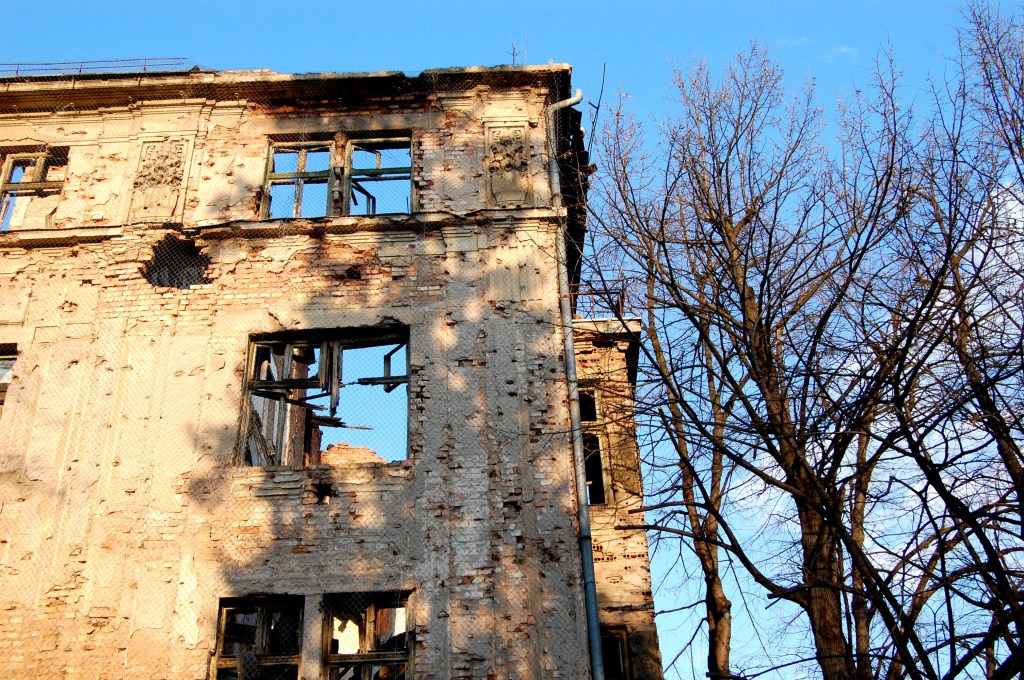
Haris Sahačić: I have been working on lot of places, and in one moment I came to Student eFM Radio in Sarajevo, and then I – btw complete building is destroyed and that is another story you should talk about – in any case, I learned for the first time the beauty of radio, Zoran Ćatić was the man who broke very sensitively my fear of microphone, I entered in his show, very listened to that time, it was one of the best radio shows that I know, and everybody where listening and calling and talking about everything in a particular way, he shaped really opinions of young people in his show and from time to time he was calling me to do something to say something, it was really step by step learning, and then, I started to works with a group of Sarajevo comedians Goodbye Bruce Lee and that is where I got the chance to read my texts or my poetry or my whatever, thoughts, into radio program.
When you start with that there is no end, you feel, it is a feeling like you talk to everybody, and you do not know who is everybody, and that is amazing, so that is radio, then, from time to time, there came different international organizations, and one German radio, Radio Frei from Erfurt, they came to visit Bosnia and Sarajevo and I was of course, translating and helping, organizing everything, so they suggested me, there is at Bauhaus University one chair where you can study radio, since you speak German, maybe you can try to see if there is a chance for you. At that time, I did not have the university degree and also my diploma from Austria was not good recognized here and there is administrative, sad story about…
Radio Elsewheres: So you went to study to Bauhaus.
Haris Sahačić: Yes, I went to study experimental radio and interface design at Bauhaus University because you cannot be only on one chair you have to go on different, also I studied media culture, but my major studies were radio. Well, that is also another experience about radio which brought me actually to all the details, all the forms of radio, but also all relevant issues related to radio production. What is the best way to speak for radio, what is the best way to produce sound and all the other details that must not be taken into account when you are doing radio but can be, and that is the approach.
Radio Elsewheres: You went to study and came back to Sarajevo?
Haris Sahačić: Of course.
Radio Elsewheres: And now you are here, and you work with CRVENA a lot?
Haris Sahačić: Yes, I am here, within CRVENA Association for culture and art, founded by feminist artists, young feminist artists, and very open for radio production.
_________________________________________________________________________________________________
Bosnian translation of the transcription
Radio Elsewheres: Simfonija opsade. Konačno Haris Sahačić koji je ovdje s nama i može nešto više reći o procesu nastanka iste. Stvarno je zanimljivo iskustvo, moram reći čim sam ušao u taj prostor i sjedio tamo na minut ili tako, sjetio sam se nečega što nije povezano s opsadom ili zvukom ili sjećanjem na rat ili bilo čime. To je zapravo bio prvi put u mom životu prije rada na filmu gdje sam malo savjetovao o zvuku. Imao sam tu, recimo, epizodu koja je nekako povezana s PTSP-om u jednom trenutku. Jedan moj prijatelj, liječnik, poslao mi je trake, neke vrste meditacijskih traka. Bilo je 9 epizoda, a jedna od njih je bila oko 30 minuta. Trebalo je sjesti, leći, udobno se smjestiti, zatvoriti oči i usredotočiti se na zvuk koji čujete. Dakle, radim ja to u svojoj sobi, gdje provodim većinu vremena dok radim, uvijek mislim da nema zvuka ili čega već, ali kad zatvorim oči i usredotočim se, čujem toliko stvari. Imao sam osjećaj da sam nakon pet minuta mogao čuti zidove, mogao sam čuti strop, sve te stvari koje inače ne proizvode zvuk koliko ja znam. Dakle, kad sam ušao u vašu instalaciju i sjeo, imao sam nekako sličan osjećaj. To me podsjetilo na trenutak kada sam prvi put shvatio koliko je zvuk prisutan u našim životima. I mislim, negdje si u svom tekstu Lejla rekla da su auralna arhitektura ili zvučni pejzaži prisutni, bili oni dizajnirani ili ne, jel’ tako, i očito kad bolje razmisliš lakše je zaustaviti sva osjetila koja dopiru do tebe nego zvukove, čak i ako staviš čepiće u uši, zvuk i dalje dopire. U svakom slučaju, Harise, stvarno sam doživio prekrasno iskustvo. Svidio mi se komad. Možeš li malo govoriti o cijelom procesu i kako je sve to skupa nastalo?
Haris Sahačić: Hvala vam što ste me pozvali da budem vaš gost i da vodimo ovaj lijepi razgovor o poslu koji sam uradio. Elektroakustična kompozicija zvuka, mi je zovemo Simfonija opsade, jer sam u produkciji koristio sve moguće, recimo standarde ili estetska pravila simfonija, tako da naziv Simfonija opsade ima više veze s estetikom nego s etikom i ovaj odnos između estetskog pitanja elektroakustične kompozicije zvuka kakva jeste i opsade kakva jeste, zapravo je velika dilema s kojom živim od samog početka projekta.
Ja sam u početku znao da će to biti elektroakustična kompozicija zvuka, i znao sam da moramo ispričati priču, tako je priča, odnosno materijal za priču, zapravo inspiriran stvarnim događajima, i moram reći, ovo je bila jedinstvena prilika da se producira ovakva vrsta rada. Obično kada radite elektroakustičnu kompoziciju zvuka, vodite računa o drugim standardima. Nije vam stalo do priče, stalo vam je do toga kako zvuči zvuk, stalo vam je do apstrakcija, do impulsnih odgovora, do odjeka i do toga koliko je matematički organizirana kompozicija. To je zapravo matematika kompozicije, ja sam eto tražio priliku da ispričam priču, da budem dokumentaran povezujući estetiku koja je zapravo jedna tvrdolinijaška estetika.
Kad elektroakustičari budu slušali, reći će, ma to nije to, ovo je prljavština, ovo nije čisto, ja sve čujem. Bilo je to kao da pokušavam pročistiti nešto što se stvarno dogodilo, i to je jedna strana priče, a s druge strane, trebale su nam konceptualne poruke i tu smo ušli u sferu urbanizma. Došli smo do nekih zaključaka. Kako čujete pucnjeve koji se dešavaju u Hrasnici ili 14 kilometara odavde, zapravo ih ne čujete, znači li to da ste sigurni? Ne. To znači da postoji granica opsade koja je stvorena samo zvukom. Ja često kažem da je sama opsada bila između ostalog i akustični kontekst. Kasnije ću doći do toga zašto ovo govorim, zapravo sada mogu reći. I danas čujete puno zvukova koje ste mogli čuti tijekom opsade, čujete ih svakodnevno u svom životu, ne postoji način na koji ih možete izbjeći – to je jedna druga dimenzija zvuka – samo je vaš kontekst drugačiji. Dakle, to je bio veliki izazov, kako u ovih 9 minuta i 11 sekundi, stvoriti taj kontekst u kojem će ljudi moći čuti ono čega se sjećaju, kako, recimo, potaknuti njihovo sjećanje samo zvukom u potpunom mraku. Bez same opsade, mislim, bili smo u insceniranoj situaciji, tako da je zapravo osmišljavanje konteksta opsade sa zvukom kao alatom bio veliki izazov, a onda, kao još jedan sloj estetike, to je uvijek bilo traganje za poveznicama između estetike elektroakustične kompozicije i dokumentarnog ili stvarnih događaja, kako bismo spojili ta dva svijeta.
Znam da su mnogi ljudi koji su sudjelovali na našoj tribini, govorili da, na primjer, ne koristim puno granata. Nisam ih htio koristiti, koristio sam samo tri demonstracije, jednu kada granata preleti vrlo blizu pa padne negdje u daljini, jednu kada granata padne i ne eksplodira, što je dodatno dramatičan trenutak, kada čujete kako granata stvara taj zvuk, vi očekujete da će eksplodirati, a ona ne eksplodira i vi prolazite kroz određeni skup emocija, tako su nam ljudi objasnili, i onda jedna granata koja eksplodira vrlo blizu, gdje zapravo ne čujete eksploziju, kada je vaš aparatus za slušanje blokiran i stvarno čujete samo tinitus, čujete pritisak basa – usput – u našoj instalaciji nam je nedostajao subwoofer, zato niste mogli čuti taj pritisak, zvuk pritiska. Ubacio sam frekvenciju od 39 ili 40 Hz, tako da sam u tom, recimo spektru, imao bas, zvuk pritiska i da smo imali subwoofer, moglo se ići još niže, i onda bi imali tu kretnju, a nakon toga unutar ove eksplozije, čujete ljude kako viču i vrište i sve je vrlo definirano. Stvarno sam htio unijeti ovaj detalj dokumenta u priču koja je elektroakustična. Kao da s dokumentarističkom estetikom ulazim u estetiku elektroakustične zvučne kompozicije, to je bila moja borba tijekom cijelog ovog projekta.
Radio Elsewheres: Možeš li samo pojasniti slušateljima zašto si odlučio ne koristiti zvuk granata, to je bila namjerna odluka koju si donio?
Haris Sahačić: Prije svega granate su bile nešto što se događalo ljudima i ja nisam htio ulaziti u tu sferu. Mnogi ljudi konotiraju, nisam htio ići toliko duboko u traumu.
Radio Elsewheres: Nisi ih htio ponovno traumatizirati.
Haris Sahačić: Upravo tako, a isto tako ne bih imao ovu dimenziju opsade, jer bi to više bili zvukovi rata, a htio sam ispričati priču o opsadi, o protokolima života ljudi koji su bili prisiljeni da žive u specifičnim okolnostima. Htio sam reći, dobro, rat je, ali kakve okolnosti života je krojio rat. Ne kažem ja da su zvukovi rata drugačiji od zvukova opsade, samo kažem da postoje zvukovi opsade koji se mogu izvući iz konteksta.
Radio Elsewheres: Da, to me potiće na razmišljane o tome kako je opsada, zvuk opsade, mislim, jedan od, barem u retrospektivi sada, tada, je očito to bila najstrašnija stvar, kada čujete kako lete granate i meci i što sve ne, ali retrospektivno, mislim da je najstrašnija stvar više u odsutnosti stvari nego u prisutnosti stvari, zato ova tišina, mnogi ljudi govore o tišini kao vrlo snažnom zvuku tijekom opsade, ta odsutnost je nekako, mislim to o čemu ti govoriš. U tom slučaju se slažem, da sam u tom djelu mogao čuti granate kako padaju okolo, to bi moglo biti gotovo kao film, bila bi to ta zvučna estetika, ne znam je li to izraz.
Haris Sahačić: Upravo ukazuješ na nešto što sam i ja htio nekako istaknuti, jer bilo bi lako pronaći program za dizajn zvuka gdje samo pritisneš jednu tipku i dobiješ zvuk eksplozije, ali to je Hollywood-ski zvuk eksplozije i nije vezan za stvarnost ili dokumentarnost, svi ovdje bi rekli, što nam ovo prodaju, a ljudi ovdje su sve to preživjeli, tako da sam preuzeo stvarno od Associated Press-a i od novinara koji su snimali tijekom opsade u Sarajevu, male komade i radio na njima.
Radio Elsewheres: To je bilo moje sljedeće pitanje, u praktičnom smislu, zvukovi koje čujemo zapravo su pravi zvukovi na kojima si radio.
Haris Sahačić: Da.
Radio Elsewheres: Dakle, to nije potpuno izmišljeno ili vještački napravljeno, ti koristiš zvukove, dokumentirane zvukove iz opsade.
Haris Sahačić: Da. Mnoge odluke tijekom procesa produkcije bile su povezane sa namjerom da kažem, ne samo kako je stvarno bilo, nego kako je bilo za naše sugovornike i sugovornice. Stvarno sam želio pokušati dovesti naše sugovornike u tu situaciju.
Rado Elsewheres: Jesu li sudionici koje ste intervjuirali bili dio vašeg procesa, jesu li bili izloženi tvom radu tijekom produkcije ili tek na kraju?
Haris Sahačić: Zaista imam veliko poštovanje prema njihovoj spremnosti da sudjeluju, i prema njihovim svjedočanstvima također i prema načinu na koji pričaju priču i kako su mi omogućili da se nađem u njihovoj poziciji. Kad smo u jednom trenutku urbanistički konceptualizirali ovaj dolazak rata matematičkim redom iz udaljenosti, svodeći pucnjavu sa 14 kilometara na 100 metara, ja sam razmišljao o tome kako da se točno smjestim u te pozicije, kako je bilo njima, to bi ja trebao razumjeti kao jer sam živio njihova iskustva i tu mi se otvorio koncept dramaturgije kroz koji sam stvarno mogao ispričati priču.
Radio Elsewheres: Htio bih se samo vratiti na nešto što si rekao na samom početku kada si spomenuo da je ovo prvi put da se pokušavaš povinovati narativu tako da nije samo estetska odluka kako nešto zvuči. Ali slušajući neke od tvojih ranijih radova, osjetio sam da zapravo uvijek postoji narativ, možda zato što imaš radove u kojima govoriš, pa se narativ donosi riječima, pričanjem, ali ovaj put je vjerojatno prvi put da to radiš samo zvukom, bez govora, bez glasa, vrlo apstraktno, ali je pripovjedački.
Haris Sahačić: Da, prvi put sam sva svoja iskustva unio u jedan rad, prije nekoliko godina sam napravio jedan rad koji je potpuno estetski, jedna matematička kompozicija Sonografije horizonata, u prirodi sam tražio matematiku, kako bih matematiku prikazao kao zvuk, a zvuk kao glazbu, a zatim kao kompoziciju prirode, i tu sam bio. Dojmila me se matematika.
Radio Elsewheres: Vidim to.
Haris Sahačić: Naravno da sam u svemu morao imati i malo matematike, i počeo sam tražiti simboličke vrijednosti koje su povijesne. 44 mjeseca opsade, 44 otkucaja u minuti, vrlo spori otkucaji. Zatim 44 minijature, cijela Simfonija opsade zapravo je zbirka od 44 zvučne minijature a svaka pojedinačna minijatura je stvorena kao loop, može funkcionirati kao loop, čak i u ritmičkom smislu, tu me inspirirao Stockhausen i njegovi radovi u kojim čujete koliko je muzikalno sve što čujemo oko sebe. Svaka minijatura ima svoje ime i sve minijature imaju poetski poredak tako da je Simfonija opsade kao poema. Ne znam da li sam uspio na engleskom ali na bosanskom je sve u poretku. To je kao da pokušavate izgraditi povijest u kodu ove kompozicije koja je visoko estetski producirana ali također prenosi i informacije koje su povijesne i dokumentarne.
Radio Elswheres: Moje sljedeće pitanje tebi – jer ovo je prvi put da si rekao da to radiš – dakle, nije samo matematika, nije tehnologija, već zapravo priče o ljudskim iskustvima. Jesi li uživao na kraju i misliš li da će ovo promijeniti način na koji radiš, da ćeš se više baviti poviješću, ili ne nužno poviješću nego ljudskim iskustvom?
Haris Sahačić: Bio sam ograničen tehnološkim sredstvima, na primjer, ako bih morao reći da cijela simfonija opsade ima 300 traka i na svakoj traci su primijenjeni razni virtualni instrumenti i svaki od tih virtualnih instrumenata uzima malo od procesora, bilo je trenutaka kad sam bio potpuno izvan kontrole. Kad nisam znao, zašto neki određeni virtualni instrument utječe na neki zvučni komadić ili minijaturu na nekom određenom mjestu, a da ja pri tome ništa ne radim, bilo je kao da radi duh mog računala.
Radio Elsewheres: Moje računalo tako radi cijelo vrijeme. A rad sa ljudima? Polazišta su ti bila sjećanja ljudi, svjedoka, je li te to na bilo koji način promijenilo, želiš li opet raditi nešto slično, što bi želio učiniti na temelju tih iskustava, tako da tvoj rad ne bude čista matematika?
Haris Sahačić: Postoji nekoliko dimenzija vrlo interesantnih, posebno ona koja se odnosi na impulsni odziv u akustici Sarajeva, posebno tijekom opsade i tu je sad taj softver Impulse Response Reverberator u koji možete unijeti određeni audio snimak i tako kreirati tačno tu akustiku, to mjesto, ali da bi stvorili tu akustiku i taj odjek, taj zvuk koji odjekuje, morate da imate trianguliranu sliku situacije, morate uzeti u obzir položaj mikrofona, položaj onog koji puca, koliko je on udaljen, gdje je zapravo on, u stanu, vani, ali i gdje puca. Dakle, triangulacija je matematika, i nije samo da nešto dokumentiram jer sam u sferi matematike, to je kao da pokušavam predstaviti iskustvo osobe koja mi je dala to svjedočanstvo, tako da eto to je pristup, tako sam ja to napravio.
Radio Elsewheres: Misliš li da ćeš u nekoj budućnosti na temelju ovog iskustva postati veći pripovjedač nego što si do sada bio? Ono što mislim da se dogodilo ovdje, pričao si priču kroz svoj zvučni komad, mislim, uvijek to radiš, ali očito je sve bilo jako opterećeno s ovim, ovim, ne želim se ni pretvarati da razumijem, svim ovim o čemu govoriš kada govoriš u tehničkim terminima, jer ja nisam producent zvuka.
Haris Sahačić: Da, ali mnogi ljudi koji se bave zvukom će shvatiti.
Radio Elsewheres: Apsolutno. Ono što me sada zanima je ovaj aspekt pričanja priče, ti si jasno ispričao priču, ispričao si je vrlo dobro, vrlo učinkovito ali da je u isto vrijeme i lijepo, očito je to napravio netko tko poznaje srž stvaranja zvuka i produkcije.
Haris Sahačić: Moram reći da je šteta – kad imam priliku – što nemamo otvoreni izvor zvukova, što nemamo neku vrstu knjižnice zvukova za javnost, to bi stvarno pomaklo produkciju u mnogim novim pravcima i na druge načine, mnoge stvari bi bilo lakše napraviti kada bi postojala takva arhiva, gdje odete i samo kliknete, kao kad odete na bbc i možete čuti kako zvuči na primjer neko oružje. To su procesi kroz koje ja nisam morao prolaziti, svo to traganje, zatim sam ušao u traženje video snimaka. Kada sam razgovarao s ljudima, ne samo s našim partnerima, nego također, mislim na rođake i ljude koji su ovdje živjeli u tom periodu, svi su govorili, zašto to radiš, šta će ti zvukovi rata, radi glazbu za ples. Mnogi od njih nisu željeli da gledam mnoge snimke i to je zapravo bila pogreška, jer što su više govorili ne radi to, ne idi tamo, tražio sam sve više, i onda sam završio na web stranici Međunarodnog suda za ratne zločine, i onda sam vidio sve te snimke masakara i odatle dolazi ovaj jedan mali dio. Vjerujem da to baš nitko nije čuo na ovaj način, da isključite video i samo čujete ljude kako viču i vrište. Jedan čovjek govori, ostavi je, ona je gotova a onda se čuje neka žena, i uvijek se sjetim, doziva neku Samiru, nevjerojatno, mislim, taj zvuk, ni sam nisam mogao u sebi obraditi, nisam stavio to, nisam stavio taj zvuk, stavio sam jedan drugi snimak kako bi u ove dvije tri sekunde samo stvorio tu atmosferu i vatru i ovo lupanje i staklo i sve i onda rez, pa disanje, kao panično disanje, pa tišina. Dakle, moram reći da ono što bi ljudi trebali pratiti sve vrijeme je metronom. Ako stvarno želite ući u sve prostore, sve poruke koje sam integrirao u rad, onda ćete stvarno čuti metronom i ono što se događa okolo, jer to je priča.
Radio Elsewheres: Super, možemo li u ovom trenutku otići negdje drugdje?
Haris Sahačić: Naravno.
Radio Elsewheres: Malo o tebi i tvom iskustvu, jer ovdje je očito riječ o raseljavanju i migracijama i svačemu tome sličnom. I sam si bio izbjeglica u Austriji, zar ne? Kako si završio u svijetu zvuka, što se dogodilo?
Haris Sahačić: Prvo moram reći da moja iskustva vezana za opsadu nisu duža od prvih mjesec dana. Imao sam četrnaest godina i sjećam se da sam trčao i čuo metke kako mi lete oko glave, i taj zvuk, htio sam to ubaciti, ali nikad nisam uspio, nikad nisam bio zadovoljan onim što sam napravio, postoji jedna scena, gdje je taj zvuk ptice zapravo, zvuči kao ptica, to je nešto čega se sjećam, i sjećam se da sam gledao sa prozora, jer živim na 12. spratu, tako da vidim Stari grad i Grbavicu, sjećam se da su moji roditelji govorili odmakni se od prozora, a ja sam išao da gledam s prozora gdje je pala granata i to je zapravo sve, moje iskustvo.
Zadivila me spremnost ljudi koji su preživjeli opsadu da govore o tome, posebno Džemo, svi ostali su više iz daleka pričali o sjećanju, a Džemo je govorio kao da se sve dogodilo danas, zato sam primijetio njegovu priču, i zato njegovo sječanje na dan kad mu je brat ubijen čujete u cijelosti kao akustičnu ilustraciju. Dakle, kad si me pitao o izbjeglištvu, vrijeme izbjeglištva počelo je nakon prvog mjeseca opsade. Slučajno su na parkingu hotela Bristol ostala dva autobusa. Otac se nekako snašao sa svojim prijateljima, tako da smo mama, ja i sestra dobili karte. I kada su ti ljudi htjeli kući, u Novi Sad, u Srbiju, mi smo bili u tom autobusu. Tako sam ušao u svijet izbjeglištva. Kasnije sam završio u Austriji, prvo u kolektivnim centrima. Vjerujem da ćeš o tome govoriti u svom programu u Bihaću. I to je nešto što ti… kad si u kolektivnom centru onda si ništa. Nemaš svoj identitet, nemaš sebe, ništa, ništa si, ne govoriš, ne znaš, ništa si. Dakle, ovo bivstvovanje izbjeglicom počinje od trenutka kada uđete u autobus. I nikad ne prestaje. Ja sam doma, u svom gradu, vratio sam se, ali sam i dalje izbjeglica.
Radio Elsewheres: Nisi jedini, mnogi kažu, jednom izbjeglica, uvijek izbjeglica.
Haris Sahačić: Da, završio sam školu kao izbjeglica u Austriji i naučio njemački jezik i onda sam se vratio. Moj odnos prema Sarajevu je romantičarski. Još uvijek ima puno razočarenja, ali nije me briga za te stvari, zgrade su uništene, društveni odnosi su uništeni, mnogi ljudi su ranjeni, mnogi ljudi nisu ono što su bili, moji rođaci, moji roditelji, ali me nije briga, to je taj odnos.
Radio Elswheres: I kako si završio kao osoba koja se bavi zvukom?
Haris Sahačić: Radio sam na puno mjesta, i u jednom trenutku sam došao do Studentskog eFM radija u Sarajevu, a onda sam – uzgred, kompletna zgrada je srušena a to je već druga priča o kojoj trebaš pričati – u svakom slučaju, vrlo brzo sam spoznao ljepotu radija. Zoran Ćatić je bio čovjek koji je razbio moj strah od mikrofona, pozivao me s vremena na vrijeme u njegovu emisiju da nešto kažem, koja je tad bila jako slušana, bila je to jedna od najboljih radijskih emisija koje znam, i svi su je slušali i zvali i pričalo se o svemu na poseban način, stvarno je oblikovao mišljenje mladih u svojoj emisiji, stvarno je to bilo učenje korak po korak. Nakon toga sam počeo raditi sa grupom sarajevskih komičara kompresovanih u emisiju Zbogom Bruce Lee i tu sam dobio priliku čitati svoje tekstove ili svoju poeziju ili svoje misli u radijskom programu, a kad jednom kreneš s tim, nema kraja, to je osjećaj, kao da govorite svima, a ne znate tko su svi, i to je nevjerojatno, to je radio i onda, s vremena na vrijeme, dolazile su različite međunarodne organizacije, i jedan njemački radio, Radio Frei iz Erfurta, došli su posjetiti Bosnu i Sarajevo i ja sam naravno, prevodio i pomagao, organizirao sve, pa su mi rekli da na Sveučilištu Bauhaus postoji jedna katedra na kojoj se može studirati radio. Budući da govorim njemački, predložili su da probam i vidim ima li šanse da upišem studije. U to vrijeme nisam imao sveučilišnu diplomu, a također moja diploma iz Austrije nije bila dobro priznata ovdje i sad tu postoji tužna administrativna priča o…
Radio Elsewheres: Tako si otišao studirati na Bauhaus?
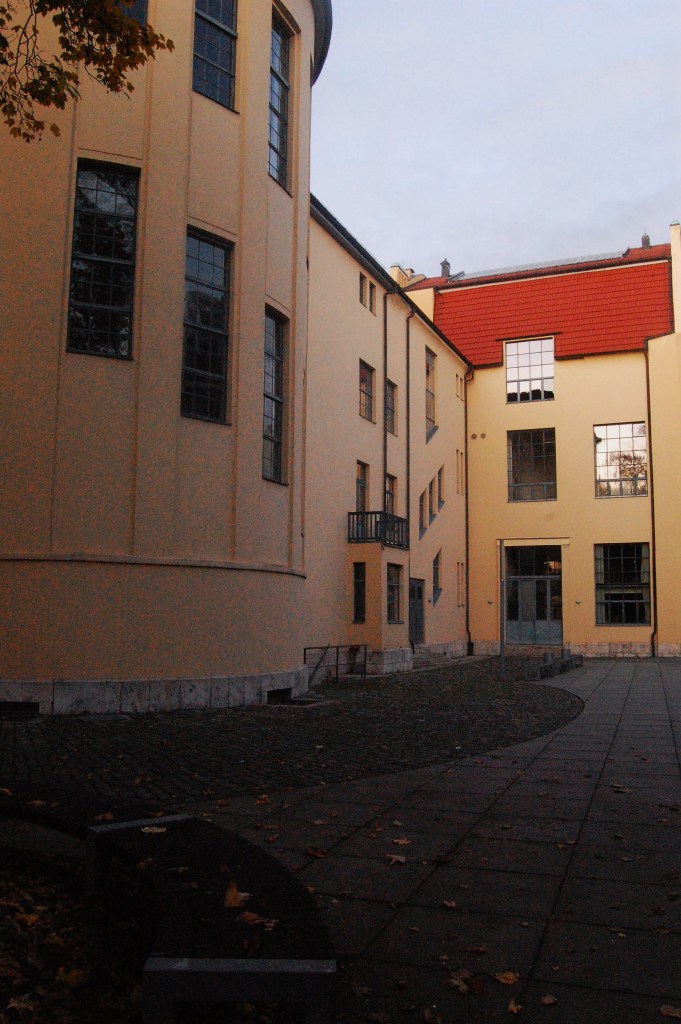
Haris Sahačić: Studirao sam eksperimentalni radio i oblikovanje sučelja na Sveučilištu Bauhaus jer ne možeš biti samo na jednoj katedri, moraš ići na druge, između ostalog sam studirao malo i medijsku kulturu, ali moj glavni studij bio je radio. To je još jedno iskustvo o radiju koje me upoznalo sa svim detaljima, svim oblicima radija, ali i svim relevantnim pitanjima vezanim uz radijsku produkciju. Kako je najbolje govoriti za radio, kako je najbolje oblikovati zvuk i sve ostale detalje o kojima se može ali i ne mora voditi računa kada se radi o radiju.
Radio Elsewheres: Otišao si na studij i vratio se u Sarajevo?
Haris Sahačić: Naravno.
Radio Elsewheres: I sad si tu i puno radiš s CRVENOM?
Haris Sahačić: Da, tu sam, dio sam Udruženja za kulturu i umjetnost CRVENA, koje su osnovale feministkinje umjetnice i koje je veoma otvoreno za radijsku produkciju.
 [~]
[~] 